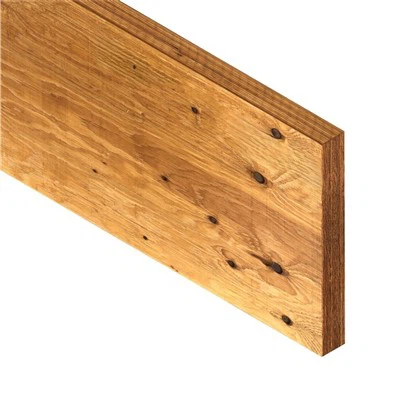
Products Description
PRODUCT DETAILS:
|
Product Name |
LVL Tough and Deformation-Resistant |
|
Material |
New Zealand radiata pine, Russian larch, etc. |
|
Length |
Up to 8.5 meters long Customized |
|
Width |
90mm to 400mm Customized |
|
Thickness |
35mm to 75mm Customized |
|
Surface treatment |
Double-sided polishing / Anti-slip treatment, Customized Support |
|
Certification Standards |
Complies with Australian and New Zealand Standards AS/NZS 4357.0. |
|
Formaldehyde Emission |
Poplar products use E0 glue, while the rest use phenolic resin glue. |
|
Design Style |
Modern |
|
Feature |
water resistant, Anti-Corrosion, Eco-Friendly |
Core Advantages
Stable Structure, Less Prone to Deformation
Unidirectional pressing of the veneer ensures even internal stress distribution, significantly reducing the probability of warping and twisting compared to ordinary solid wood. This maintains flatness throughout the formwork process, guaranteeing dimensional accuracy of poured walls and columns and reducing subsequent repair work.
Superior Load-Bearing Capacity
The parallel-grain load-bearing structure provides bending and compressive strength far exceeding that of ordinary pine wood of the same specifications. It can withstand the continuous loads from concrete pouring, resulting in higher construction safety and suitability for high-rise and large-scale infrastructure projects.
Higher Reusability
The boards are free of hollow cores, large knots, and other natural defects, making them less prone to breakage under stress. Under proper use, they can be reused multiple times, reducing the financial investment required for frequent timber purchases.
Precise and Uniform Dimensions
Mechanized standard-length cutting ensures strict control over length, width, and thickness tolerances, eliminating the need for extensive secondary adjustments on-site and improving carpentry efficiency.


Production Process and Specialized Craftsmanship for Engineering Load-Bearing Timber
The entire production process is customized around four core indicators for building construction: high load-bearing capacity, no deformation, durability, and moisture resistance. Six meticulous processes ensure quality control at every stage, eliminating potential problems with the materials used in engineering projects:
High-Density, Few-Knot Veneer Fine Screening
Both manual and machine screening of rotary-cut veneers from logs prioritizes high-quality veneers with straight grain, dense fibers, few knots, no voids, no insect holes, and no rot. Loose, soft, misaligned, and defective raw materials are thoroughly eliminated, ensuring the overall load-bearing capacity and deformation resistance from the base material level.
Segmented Gradient Constant Temperature Uniform Drying and Shaping
A multi-segmented, gradual low-temperature drying process slowly adjusts the veneer moisture content to the standard range for engineering materials, unifying the moisture content difference across the entire batch of boards. This eliminates the potential for deformation caused by uneven drying and retains the toughness of the wood fibers, preventing the boards from becoming brittle and easily broken due to high-temperature drying.
CNC Uniform Application of Water-Resistant Structural Adhesive
Fully automated CNC adhesive application equipment evenly applies specialized water-resistant and toughened structural adhesive, ensuring uniform adhesive thickness, no leakage, and no adhesive lumps. This results in high interlayer bonding strength and strong water resistance, preventing delamination, splitting, and cracking even under long-term damp and vibration conditions.
High-Pressure Integrated Hot-Pressure Assembly with Grain-Side Balance
Uniform grain-side assembly counteracts unidirectional stress. High-tonnage, constant-temperature, high-pressure, and sealed compaction completely eliminates internal voids, resulting in a dense and homogeneous timber structure. This comprehensively improves bending, compressive, and impact resistance, preventing later-stage denting and delamination.
Long-Term Constant-Temperature Stress Relief Curing and Shaping
The shaped timber is placed in a constant-temperature curing room for extended periods, gradually releasing residual internal stress generated during hot-pressing. This proactively prevents deformation and ensures long-term dimensional stability after leaving the factory, preventing spontaneous bending, twisting, and warping.
Precision sanding on all four sides + end passivation and reinforcement treatment
Multiple fine sanding and leveling on all four sides ensures a smooth and flat surface and tight fit; end passivation and grinding reinforcement reduces chipping and corner breakage caused by construction bumps and hoisting and handling, adapting to rough construction conditions on site and improving the integrity rate of finished products.
Environmental Standards and Export Testing Qualifications:
Fully compliant with domestic building materials specifications and civil engineering acceptance standards, while also possessing a complete set of foreign trade qualifications, suitable for both domestic project acceptance and overseas infrastructure building material exports:
1. Passed Mechanical Load and Deformation Resistance Testing: Each batch undergoes random sampling testing for flexural strength, compressive strength, impact resistance, and warpage. Aging tests are conducted simulating heavy loads, vibration, and wet-dry cycle conditions on construction sites to ensure the load-bearing safety of the project meets standards.
2. Passed Water Resistance, Moisture Resistance, and Mildew Resistance Testing: Immersion and mildew resistance aging tests are conducted for damp, rainy, and muddy environments on construction sites to verify the moisture resistance, corrosion resistance, and mildew resistance of the boards, making them suitable for outdoor construction and damp underground engineering conditions.
3. Batch-wide Control of Moisture Content and Straightness: Moisture content, straightness, and dimensional tolerances of the boards are tested batch by batch to unify batch physical parameters, eliminating large and small deviations and bent defects, ensuring overall construction flatness and safety.
4. Complete set of project acceptance and foreign trade customs clearance documents: We can provide mechanical testing reports, water resistance reports, factory quality inspection certificates, IPPC fumigation certificates, and certificates of origin to meet the requirements for domestic project completion acceptance and overseas infrastructure and building material export customs clearance.
FAQ
Q. If your company is reliable ?
A: Founded in 2009,company covers an area of 52,000 square meters,more than 300 employees, including nearly 20 scientific researchers.Powerful LVL manufacture in China.
Q.How long is your delivery time?
A: For full container, factory lead time About 20~35 days.
Q: what's your payment terms and trade terms?
A: Accepted Delivery Terms: FOB, CFR, CIF, CIP, FCA, CPT, Express Delivery, DAF.
Q: How can you promise quality
A: It complies with the Australian and New Zealand standards AS/NZS 4357.0. Some products have passed JAS-ANZ certification, and the formaldehyde emission level reaches E0 level certification, FSC certification can also be provided.
Q:How about the shipping fees?
A: For large quantities of products, ocean freight is usually the best option. The price of ocean freight depends on the destination port and the current ocean freight rates. Please contact us and we will provide you with a better quote based on the actual situation.
Hot Tags: lvl tough and deformation-resistant, China lvl tough and deformation-resistant manufacturers, suppliers, factory, Durable Strong LVL Beam for Building Construction, E0 LVL Beam Window Environmentally Friendly, High Quality Pine LVL Beam Flooring Joist, High Strength LVL Beam for Floor Joist, Laminated Veneer Main Beam, Stable Support LVL Beam for Lintels