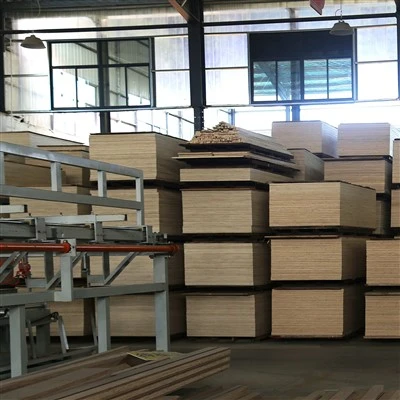
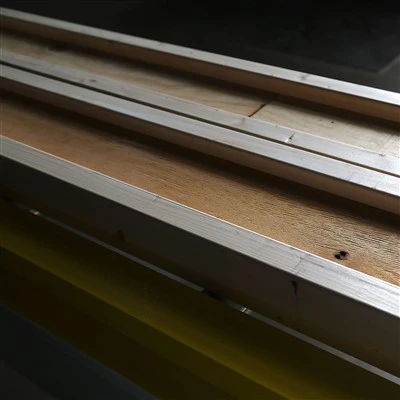
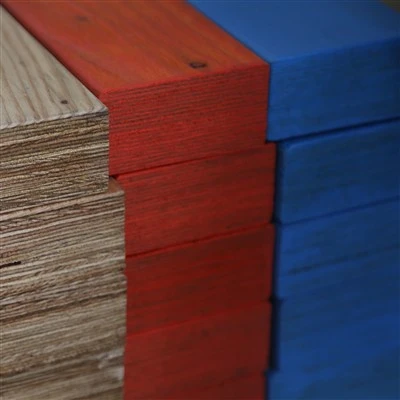
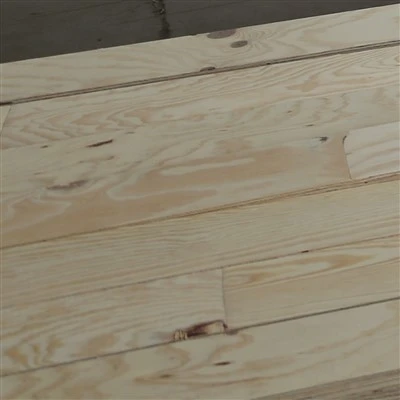
When clients arrive at a factory to inspect goods, they use tape measures to check dimensions piece by piece, examine the ends, and scrutinize glue lines. The factory might view the client as "overly picky," while the client might perceive the factory as "lacking attention to detail." A growing number of Chinese LVL (Laminated Veneer Lumber) manufacturers are shifting their mindset-viewing client inspections as a "free third-party quality audit" and using the client's critical feedback as a roadmap for improvement. A tape measure, therefore, measures more than just dimensions; it gauges the level of trust between the factory and the client.
1. The Awkward Reality of "Client Inspections"
"The ends of this batch are slightly cracked-this won't do." "This piece has too much curvature; it needs to be replaced." "The label is applied crookedly-rework it."
As the client raises a series of issues during the inspection, the factory representatives feel embarrassed, often countering, "These are just minor issues; they don't affect the product's functionality."
The client remains firm: "A collection of minor issues eventually becomes a major problem. I'm not paying for a batch of defective goods just because they're 'still functional.'"
Scenarios like this play out repeatedly during inspections at many LVL factories. The factory perceives the client as "nitpicking," while the client views the factory as having a "good enough" (lax) attitude toward quality.
"In the past, we actually dreaded client inspections," admits a factory manager. "We feared they'd find faults, demand rework, or cause shipping delays. But then I realized-if a client is willing to come and inspect the goods, it means they still want to do business with you. If they stopped coming and simply switched to another supplier-that would be the real disaster."
2. From "Dreading Inspections" to "Welcoming Them"
With this shift in perspective, some factories have begun proactively inviting clients to conduct inspections, even treating these visits as "free quality-control lessons":
- Preparation: Before the client arrives, the factory conducts its own "pre-inspection." They review the items the client is likely to check-dimensions, appearance, end conditions, glue lines, and labeling-addressing any issues beforehand.
- Full-Process Accompaniment: During the inspection, production supervisors and quality control personnel accompany the client throughout the process. Any issues pointed out by the client are documented immediately, explained on the spot, and scheduled for rectification right away. Documentation and Archiving: Issues raised during customer inspections are compiled into a "Customer Inspection Issues List," which serves as a basis for internal improvements.
- Post-Inspection Review: Following an inspection, a review meeting is held to analyze the issues raised-distinguishing between isolated incidents and systemic problems.
"We view customer inspections as a form of 'external audit,'" says a quality supervisor. "Customers have a keen eye; the issues they point out are often things we have grown so accustomed to that we no longer even notice them."
3. An "Improvement List" Triggered by a Tape Measure
A tape measure is the tool most frequently used during customer inspections. The issues identified through its use become the starting point for factory improvements:
- Dimensional Deviation: A customer measured 10 pieces and found that 2 of them had a thickness discrepancy of 1mm. An internal investigation revealed that uneven wear on the sanding machine's abrasive belt was causing thickness fluctuations. Improvement measures: Shorten the replacement cycle for abrasive belts and increase the frequency of in-line thickness checks.
- End-Grain Cracking: A customer discovered fine cracks at the ends of some pieces. Analysis indicated that overly rapid drying had caused stress concentration at the ends. Improvement measures: Adjust the drying curve and add a waxing process for the ends.
- Illegible Labels: A customer noted that the specifications on the labels were unclear. An inspection revealed that the label printer's ink cartridge was nearly empty. Improvement measures: Add a label-printing verification step, requiring a check of label clarity for the first item produced in every shift.
- Damaged Packaging: A customer found that some strapping bands were loose. An inspection revealed that the strapping machine's tension/pressure was insufficient. Improvement measures: Check the strapping machine's pressure at the start of every shift and increase the frequency of random quality checks.
"If the customers hadn't pointed these things out, we might never have discovered them," says a production supervisor. "Customer inspections help us uncover our blind spots."
4. Shifting from "Reactive Rectification" to "Proactive Prevention"
If a factory merely addresses issues raised by customers on a case-by-case basis-treating only the symptoms-the same problems are likely to recur. Consequently, some factories have begun shifting from "reactive rectification" to "proactive prevention":
- Categorization of Issues: Issues raised during customer inspections are classified by type (e.g., dimensional, appearance-related, or packaging-related) to identify recurring or high-frequency problems. Root Cause Analysis: Conduct root cause analysis for frequently occurring issues-are they related to equipment, raw materials, or operational processes?
- Systemic Improvement: Develop improvement measures that address root causes, rather than merely treating surface-level symptoms.
- Effectiveness Tracking: After implementing improvements, monitor the results of subsequent customer inspections to verify their efficacy.
"We maintain a 'Customer Inspection Issue Tracking Log,'" says a quality supervisor. "Every issue raised during an inspection is documented, along with the corrective actions taken. Before the next inspection, we check to see if any previous issues have resurfaced."
5. Genuine Customer Feedback
"In the past, factory staff would look unhappy when I arrived for an inspection, as if I were just trying to find fault," shares a client from the Philippines. "Now, they proactively say, 'Feel free to look around; if you find any issues, we'll fix them right away.' This attitude gives me great peace of mind."
"Once, I offered a small suggestion regarding packaging, and by the next inspection, I saw they had actually implemented it," notes a client from Malaysia. "This 'act on feedback' approach is far more effective than any verbal promise."
"I've become much more 'lenient' during my inspections lately," a client from Singapore says with a smile. "It's not that I've become less diligent-it's that the quality of their goods has improved so much. I used to have to point out a whole list of problems; now, I can look around and find virtually nothing to criticize."
Customer inspections are not about "causing trouble," but rather "facilitating improvement." When Chinese LVL (laminated veneer lumber) manufacturers choose to view a client's critical eye as a "free quality-control lesson," they are enhancing not just the quality of a single batch, but the reliability of their entire production system. This mindset-treating the customer as a mentor-vividly illustrates the shift in Chinese manufacturing from "passively coping" to "proactively striving for excellence."