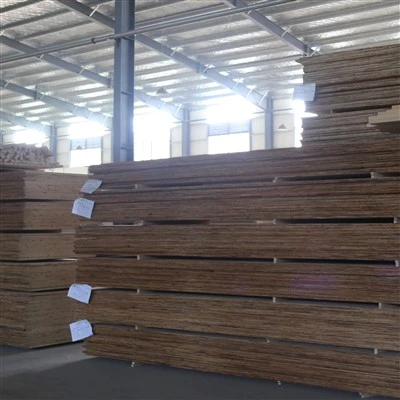
When customers purchased LVL materials, they previously had to source the necessary connectors, cutting tools, and protective gear themselves. Scrambling to assemble these items was time-consuming and laborious; furthermore, mismatched tools often led to inefficient installation and quality issues. A number of Chinese LVL factories have begun providing "tool matching" services for their customers-not merely selling tools, but recommending, bundling, or even procuring the most suitable tools and accessories on the customer's behalf. This small change has significantly simplified the process for customers.
1. The Challenge: "Right Material, Wrong Tools"
"The materials arrived, but the workers discovered the connectors were incorrect and had to buy new ones," said a contractor from the Philippines. "After buying replacements, they found the bolt lengths were wrong and had to swap them again. This back-and-forth caused a delay of several days."
This is a common issue at many construction sites. While LVL materials themselves are standardized, the accompanying tools and accessories often lack coordination: connector specifications may not align with LVL hole placements, saw blades may be unsuitable for the material's density, and protective gear may be inadequate.
"Customers buy the material, but utilizing it effectively requires a complete set of supporting items," explained a factory manager. "If customers try to piece together the necessary items themselves, incompatibilities can arise, preventing them from getting the best results from the material."
2. Three Approaches to "Tool Matching"
To address this issue, some factories have introduced "tool matching" services, employing three specific strategies:
- Recommended Lists: Including a "recommended tool list" with quotations or shipping notices. This list details the most suitable connectors, cutting tools, and protective gear for the specific batch of products, noting specifications, brands, and estimated prices so customers can make their own purchases.
- Procurement Services: Offering purchasing assistance if local sourcing is inconvenient for the customer. The factory procures the required tools based on customer needs and ships them alongside the main order, charging only the actual cost.
- Bundled Packaging: Directly including commonly used accessories (such as bolts, washers, or repair adhesive) in the shipment in appropriate quantities, eliminating the need for separate purchases. For example, five sets of bolts might be included for every 100 beams shipped.
"We have a Middle Eastern client who, with every order, asks us to 'pick up the screws while you're at it,'" said a sales manager. "We source them from local suppliers and ship them along with the main order. It saves the client a lot of hassle."
3. Key Components of the Recommendation List
What should a good "recommended tool list" include?
- Fasteners: Recommended specifications, materials (e.g., galvanized steel or stainless steel), and quantities. For pre-drilled holes, specify the bolt size that matches the hole diameter and location.
- Cutting Tools: Recommended saw blade types (e.g., carbide-tipped), tooth count, and diameter. If the client uses a handheld saw, recommend the appropriate blade.
- Protective Gear: Recommended dust masks, safety goggles, and gloves. Cutting LVL generates sawdust, so protection is crucial.
- Auxiliary Materials: Such as waterproof adhesive, repair filler, and end-sealing wax. While these items are small, they solve practical problems.
- Tool Sourcing: Indicate where these tools can be purchased locally or whether the factory can procure them on the client's behalf.
"Our list isn't just a casual suggestion; it's been field-tested," said a technical supervisor. "For instance, the saw blades we recommend are ones we've tested in our own workshop and confirmed to be effective. If clients buy based on our recommendations, they won't run into issues."
4. Practical Benefits of "Tool Matching"
This small service delivers tangible results:
- Increased Construction Efficiency: With the right tools, workers avoid trial-and-error, making installation smoother. Some clients have reported installation efficiency gains of over 20%.
- Fewer Quality Issues: Incorrect tools can lead to uneven cuts or weak connections. Using the right tools naturally minimizes many quality problems.
- Improved Customer Experience: Clients appreciate the thoughtfulness-"This supplier is so attentive; they even considered the tools I'd need."
- Reduced After-Sales Inquiries: Many after-sales issues stem from using the wrong tools. Providing the right matching tools significantly cuts down on these types of inquiries.
"In the past, customers would frequently ask, 'What size bolt do I need?' or 'Which saw blade should I use?'" a sales manager said. "Now, we proactively send them a list, and they simply buy what's on it. It saves the customer hassle and makes things easier for us, too."
5. The "Boundaries" of Tool Recommendations
Providing tool recommendations requires setting boundaries; the factory shouldn't try to do everything:
- Recommendations are not mandatory: Customers have their own preferred tools and brands; the recommended list is for reference only and does not force the customer to use specific items.
- No markup on price: If purchasing on the customer's behalf, costs are billed at actual price without a markup. The value lies in the "materials plus service" package, not in the price difference of the tools.
- No liability for tool quality: Recommended tools are "effective," but not "perfect." If issues arise from using the recommended tools, the factory does not assume liability for the quality of the tools themselves.
- No overriding the customer's technical judgment: Tool recommendations are for reference only; the final decision on which tools to use and how to execute the work rests with the customer based on actual conditions.
"We aren't 'tool sellers,'" said a factory executive. "We help our customers 'use the materials effectively.' We recommend tools so that the customer finds them easy and reliable to use."
6. Real Customer Feedback
"In the past, when buying materials, I had to figure out which tools to use myself. Now, the factory sends a list directly, and I just buy according to that." - Contractor, Malaysia
"Once, the connectors were wrong, so the workers improvised with others, but the installation wasn't stable. Later, we used the connectors recommended by the factory, and it was much more secure." - Project Manager, Philippines
"The screws purchased on our behalf were good quality and reasonably priced. It saved a lot of trouble compared to sourcing them myself." - Importer, Indonesia
"This small service makes me feel that the factory isn't just interested in 'moving product,' but genuinely wants me to get the job done right." - Customer, Singapore
Providing tool recommendations is not merely about "increasing sales," but about "extending service." When Chinese LVL factories take the initiative to help customers determine "which tools and accessories to use," they are offering more than just materials-they are providing a complete, user-friendly solution. This service mindset of "thinking from the customer's perspective" represents a pragmatic path for Chinese manufacturing to transition from simply "selling products" to "selling solutions."