It's common knowledge that wood is susceptible to water and sun damage. However, on overseas construction sites, open-air storage of materials is the norm. How can LVL (Leafboard) products withstand the sun and rain at the destination port without deteriorating? A series of innovations in packaging and protection technologies by Chinese exporters are helping customers easily address this challenge.
1. The "Cruel Test" at the Construction Site
The real test for LVL products begins when the container is opened at the destination port. In many overseas construction sites, especially in emerging markets, indoor warehouses are a luxury; materials often need to be stored in the open for weeks or even months. Strong ultraviolet radiation, sudden downpours, and hot, humid climates can all cause the wood to crack, mold, or warp before it is even used.
"Our customers often complained that the materials started to turn black or crack at the ends within days of arriving at the construction site," recalled a trader specializing in exports to Africa. "Later we discovered that the problem wasn't entirely product quality, but rather that the packaging and protection hadn't taken into account the actual storage conditions at the construction site."
2. Three-Layer Protection in Packaging Technology
To address this pain point, a leading Chinese LVL exporter has developed a "construction site-friendly" packaging solution:
- First Layer: Waterproof and Breathable Membrane. Traditional plastic films, while waterproof, easily condense inside. The new waterproof and breathable membrane blocks external rainwater while allowing moisture inside the wood to slowly dissipate, preventing "suffocation."
- Second Layer: Peelable Protective Layer. A peelable UV-resistant coating or reflective film is added to the top of the bundled product. This material reflects most of the sun's heat, preventing the top layer of wood from cracking due to sun exposure. After receiving the goods, customers simply peel off this film to reveal the intact material underneath.
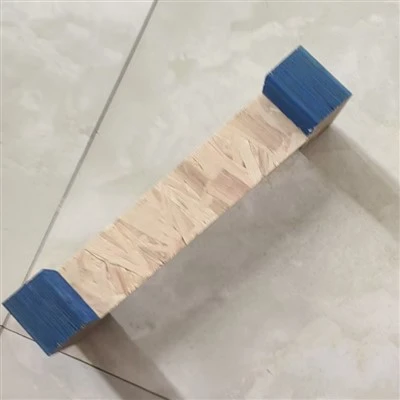
- Third Layer: End Sealing Wax. Wood is most vulnerable to water ingress at the ends. After cutting, the factory immediately soaks the ends in hot wax to form a waterproof barrier. This barrier effectively prevents moisture from seeping in, so the materials can withstand being stored in the rain for several days without significant damage.
3. The Practical Wisdom of "Phase Unpacking"
Beyond the packaging itself, Chinese suppliers have begun guiding customers on "smart unpacking." They print simple illustrations on each bundle of products:
- "Unpack first, unpack later"-Advising customers to unpack in batches according to the construction schedule, avoiding exposing all materials at once.
- "Please elevate after unpacking"-Reminding customers that even after unpacking, materials should be elevated to avoid direct contact with ground moisture.
- "Cover for long-term storage"-Advising customers to prepare simple waterproof tarpaulins as additional protection.
These seemingly simple suggestions significantly extend the "waiting time" of materials at the construction site.
4. The Art of Balancing Cost and Protection
Increasing the number of packaging layers means increased costs. How can better protection be provided without significantly increasing the price? Chinese factories have found a balance in practice:
- Differentiated packaging based on destination: Goods shipped to the Middle East receive enhanced UV protection; goods shipped to Southeast Asia receive enhanced moisture protection; and goods shipped to Europe prioritize environmental protection and recyclability. Different markets, different configurations-costs are used effectively.
- Local sourcing of packaging materials: Some packaging materials (such as corner protectors and strapping) are cheaper to source at the destination port. Some suppliers are starting to experiment with "reduced packaging," focusing protection on ends and strapping, while advising customers to supplement outer protection locally.
- Reusable packaging design: Some innovative packaging uses modular designs, allowing customers to fold and store packaging materials after unpacking for subsequent on-site material protection or transport to other construction sites, achieving multiple uses for one item.
5. Customer reputation and market recognition
This "site-oriented" packaging philosophy is winning widespread recognition from overseas customers.
"Before, we had to rush to the warehouse every time we received goods, but now we can slowly arrange construction," said a Nigerian builder. "The Chinese suppliers' packaging is very thoughtful, even considering the local climate."
"The packaging also has unpacking instructions, which are easy for the workers to understand, and I don't have to supervise it every day anymore," said a Filipino project manager. "The materials were stored on the construction site for a month, and when we opened them, they were still clean. We are confident in the quality."
The evolution of LVL export packaging in China reflects a profound shift in Chinese manufacturing from "selling products" to "selling services." When packaging is no longer just a protective layer for transportation, but becomes a "solution" adapted to the actual needs of the construction site, it carries not only timber, but also a deep understanding and care for the customer's usage scenario. This philosophy of "leaving the trouble to ourselves and the convenience to the customer" is one of the secrets to Chinese manufacturing winning the trust of the global market.