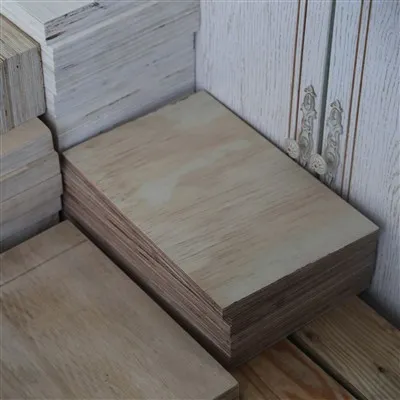
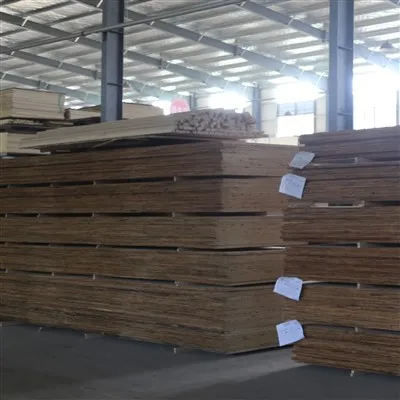
When people think of wood, they often think of nature, craftsmanship, and uncertainty. However, LVL (Laminated Veneer Lumber), born in modern factories, is a highly "digitalized" and "intelligent" product. From a tree to a high-performance beam, its production process is filled with precise data and control, making it a truly "thinking" piece of wood.
1. From "Experience" to "Data": A Leap Towards Precision in Production
Traditional woodworking relies on the "eyes" and "feel" of experienced craftsmen, and the final performance of the material is greatly affected by differences in the raw materials. LVL production, however, begins with a "digital checkup" of each veneer. Through online scanners, the thickness, density, and even defects (such as knots) of the veneer are converted into precise data. Based on this data, the computer automatically grades the veneer and plans the optimal position for each veneer in the final product-high-strength veneers are placed on the outermost layer where they bear the most stress, while slightly flawed veneers are placed on the innermost layer where the impact is less. This data-driven "strategic deployment" ensures the uniformity and stability of product performance.
2. Hot Pressing "Prescription": A Scientific Symphony of Temperature and Pressure
The key step in LVL production is pressing the glued veneer into a robust whole. This process no longer relies on fixed process parameters, but rather, like a doctor prescribing a prescription, a unique "hot pressing curve" is executed by an intelligent control system tailored to different tree species, glues, and target products. The system precisely controls the temperature, pressure, and time at different stages to ensure perfect glue curing and optimal internal stress balance. Each pressing operation is a precise adjustment based on real-time data feedback.
3. "ID Card" and Traceability: A Closed Loop of Quality Management
Every LVL product leaving the factory has its own "digital ID card" (QR code or stamp). Scanning it allows you to trace the entire "past and present" of this beam: which batch of veneer was used, when it was manufactured on which production line, what quality inspections it underwent, and even key mechanical performance test data. This is not only a transparent commitment to customers but also a valuable data source for internal quality analysis and continuous process optimization within the factory. When material problems arise, precise traceability is possible, rather than searching for a needle in a haystack.
4. Connecting the Future: From Manufacturing to "Intelligent Manufacturing"
The cutting-edge LVL factory is pushing this digitalization to a deeper level. By collecting massive amounts of production data and combining it with artificial intelligence algorithms, the factory can predict equipment maintenance cycles, optimize raw material ratios, and even automatically adjust product performance profiles based on market feedback. Production is no longer merely "fulfilling orders," but possesses a certain degree of "thinking" and "predictive" capabilities.
The story of LVL is a model of the deep integration of traditional materials and modern technology. It tells us that even the oldest building materials can be revitalized with new vitality through the empowerment of data and algorithms. This "thinking" piece of wood carries not only the weight of buildings but also a clear footprint of modern industry's transition from "manufacturing" to "intelligent manufacturing."