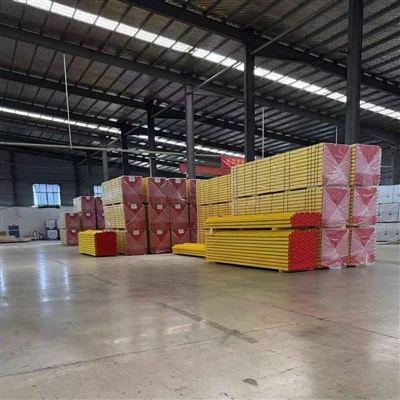
As products become increasingly homogenized, price wars have become a reluctant choice for many exporters. However, a group of Chinese LVL exporters are seeking a new breakthrough-shifting from "selling products" to "selling solutions." They are no longer offering individual timbers, but rather solutions on "how to use timber more economically, install it faster, and build it more stably."
1. The Dead End of Price Wars
"Can your price go any lower?" This is the most common question heard by LVL exporters.
As products become increasingly homogenized, customers' selection criteria gradually become solely based on price. You quote 1000, someone else quotes 980; you match 980, someone else quotes 950. The lower the price is pushed, the thinner the profit margin becomes.
"There are no winners in a price war," lamented an exporter with ten years of experience. "Customers won't be loyal just because your price is low; if there's an even lower price next time, they'll leave. We must find reasons to keep customers beyond price."
2. From "Selling Products" to "Selling Solutions"
- Some companies are beginning to change their thinking: not just selling products, but also selling solutions on "how to use the product."
- Usage Calculation Service: Clients provide project drawings, and the factory calculates the required material quantities, specifications, and optimal cutting methods for maximum material efficiency. Clients don't need to calculate each item manually.
- Installation Guidance Service: We provide illustrated installation guides, video tutorials, and even remote video guidance. Workers who don't understand English can install the beams simply by looking at the diagrams and videos.
- Construction Optimization Suggestions: Based on the client's project characteristics, we suggest better construction solutions. "For your span, using our beams is more material-efficient and safer than using square beams."
"We don't just provide quotes; we also analyze the materials for our clients," said a sales manager. "Clients feel we are professional and are willing to pay a little more for our services."
3. Development of Service Tools
To make solutions easier to implement, some companies have developed simple and practical tools:
- Usage Calculation Sheet: Clients input room dimensions, span, and spacing, and the system automatically calculates the required material quantities and specifications. An Excel spreadsheet suffices.
- Installation Diagram Card: An A4-sized card with installation steps on the front and frequently asked questions on the back. Posted on the construction site wall, workers can easily refer to it.
- Video Tutorial Library: Installation videos categorized by product type, each no longer than one minute. Customers can watch by scanning a QR code; no app download is required.
"We don't spend much money on these tools," said a foreign trade manager. "Excel spreadsheets, A4 paper printing, and mobile phone video recording are all zero-cost. But customers feel we are professional and dedicated."
4. Problem-Solving Ability
Problems are inevitable during construction. Helping customers solve problems is the greatest added value:
- Emergency Technical Support: When customers encounter difficulties during construction, they send photos and videos, and technicians provide online guidance. "You installed this connector backwards; just reverse it."
- Alternative Solution Suggestions: If a customer's required specification is not in stock, we help them find an alternative. "This specification is out of stock, but we have another specification; it can be used with a slight adjustment."
- On-Site Problem Investigation: For long-term large clients, technical personnel are dispatched to the site to troubleshoot problems when necessary. Although this is more costly, it solves major issues.
"Once, a customer reported that the materials were deformed," a sales manager said. "After watching the video, we found that the problem was due to improper storage-they were placed directly on the muddy ground without being elevated. After guiding him on the correct storage method, the problem was solved."
5. From "Solution" to "Trust"
The value of a solution ultimately lies in the customer's trust:
- Increased Customer Dependence: Customers become accustomed to your professional service and think of you first when they encounter problems. This "habit" is the hardest to replace.
- Enhanced Bargaining Power: Customers are willing to pay for "peace of mind," rather than just focusing on the lowest price. "You may be a little more expensive, but with you, it's worry-free; I don't have to worry about usage, installation, or after-sales service."
- Stable Long-Term Cooperation: Customers won't easily switch suppliers with good service. "Switching to a new supplier means having to readjust to the old system, which is too troublesome."
"We have a customer who has been cooperating with us for five years," a factory manager said. "He knows our prices aren't the lowest, but he never haggles. He says, 'You're worry-free, and it's worth the price.'"
Products can be copied, and prices can be compared, but the professional ability to "help customers use products effectively" is difficult to imitate. When Chinese LVL exporters shift from "selling timber" to "selling solutions," they are building not only customer relationships, but also professional barriers and a foundation of trust. This service upgrade of "creating value through expertise" is the inevitable path for Chinese manufacturing to move from "price competition" to "value competition."