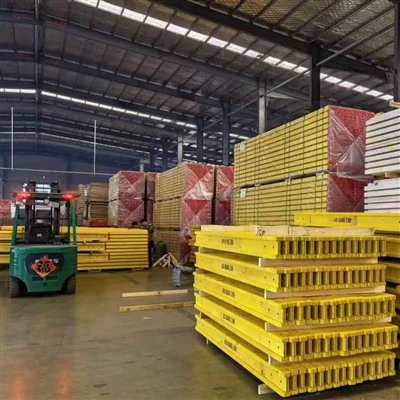
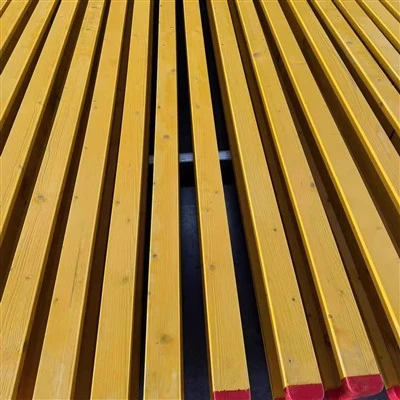
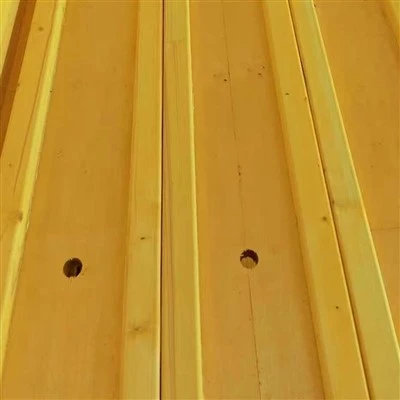
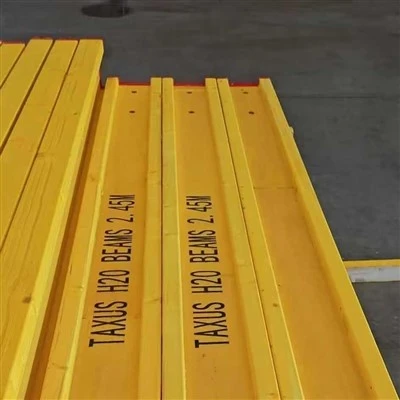
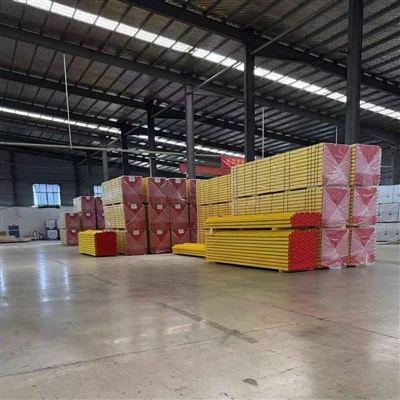
What "exams" must an H20 LVL (Laminated Veneer Lumber) I-beam undergo before leaving the factory? From flexural strength and bonding durability to end-protection and dimensional accuracy, every test is critical to how the beam will perform on a construction site. A group of Chinese H20 I-beam manufacturers are now "letting the data speak for itself," ensuring that overseas clients can be confident in the quality of their products even before the shipment arrives.
1. The First "Exam": Flexural Strength
The primary function of an H20 I-beam is to bear loads. In formwork support systems, it must withstand the weight of concrete, the movement of construction personnel, and the impact forces that occur during the pouring process.
Flexural strength is the key metric for determining how much weight a beam can support. According to industry standards, an H20 I-beam should have an allowable bending moment of 5.0 kN·m. Factories take samples from each production batch and send them to a laboratory for three-point bending tests. By recording deformation data throughout the loading process, they confirm that the beam will not fail when subjected to its design load.
"What clients care about most is whether the beam can 'hold the weight,'" says a factory quality control supervisor. "By including the test data in our reports, we give our clients peace of mind."
2. The Second "Exam": Bonding Durability
The flanges and web of an H20 I-beam are bonded together with adhesive. If the adhesive lacks water resistance, the flanges and web could separate after prolonged use in damp environments, rendering the entire beam unusable.
To verify bonding durability, factories conduct a "boiling water" test: samples are submerged in boiling water for 72 hours, after which they are inspected for any signs of delamination. For an H20 I-beam to pass, it must retain at least 85% of its original bonding strength after this boiling process. "This test is quite brutal," a technician remarked. "But only by withstanding such an ordeal can the beams remain stable when exposed to the sun and rain on a construction site."
3. The Third "Exam": End-Protection
The ends are the most vulnerable parts of an H20 timber beam. During handling or formwork dismantling, they are prone to impacts and cracking. Once an end is damaged, the load-bearing capacity of the entire beam is compromised.
The factory invests significant effort into protecting these ends-applying waterproof paint, fitting red plastic caps, or encasing them in iron sleeves. Each method undergoes a "simulated impact" test, where an object of a specific weight is dropped onto the end from a set height to ensure the protective layer remains intact and the timber does not crack.
"Clients might not notice the details of the beam ends, but if they're damaged, the whole beam becomes unusable," a factory manager explained. "By protecting the ends, we ensure the beams last longer-which keeps our clients coming back."
4. The Fourth "Exam": Dimensional Accuracy
H20 timber beams are designed to be used in conjunction with other formwork systems. If the dimensional deviation is too large, connectors won't fit, forcing workers to make on-site adjustments-a time-consuming and laborious process.
The "exam" for dimensional accuracy covers flange width, web thickness, total height, length, and straightness. Factory staff measure each parameter using calipers and tape measures, recording the results in an inspection report. For an H20 beam to pass, its length must be within ±3mm of the specification, and its straightness deviation must be within L/500.
"Precision equals efficiency," says a sales manager. "When the dimensions are accurate, workers can assemble the system faster, and the client stays satisfied."
5. The Fifth "Exam": The Client's "Final Inspection"
All the aforementioned "exams" take place within the factory. The final grade, however, is determined by the client.
During the inspection process, clients use tape measures to verify dimensions, check the condition of the beam ends, examine glue lines, and cross-reference labels. Every single detail serves as a test of the factory's quality management system. "We aren't afraid of clients inspecting our goods," says a factory manager. "What we actually fear is when they *don't* inspect them-because that suggests they no longer care, and they likely won't be coming back to us next time."
The "test report" for an H20 timber beam is not merely a single sheet of paper; it represents an entire quality control process, spanning everything from raw materials to the finished product. When Chinese H20 beam manufacturers willingly subject their products to rigorous evaluation-covering criteria such as flexural strength, bonding durability, end-protection, and dimensional accuracy-they are delivering more than just a product; they are providing a verifiable commitment to quality. This pragmatic, data-driven approach is precisely the core strength that enables "Made in China" to earn the trust of overseas clients.