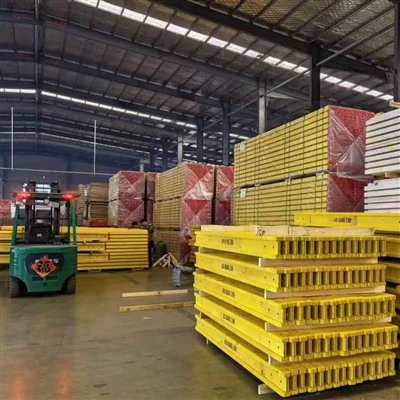
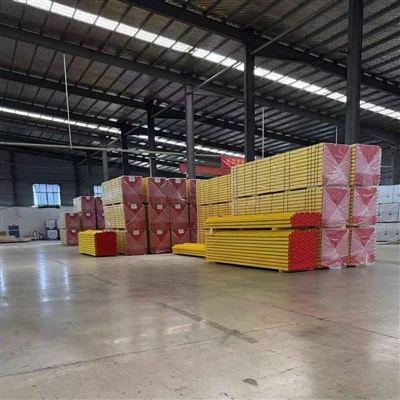
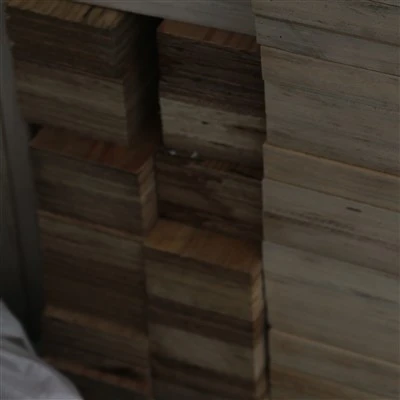
In the construction formwork rental industry, the number of times a single beam can be reused directly dictates rental pricing and profit margins. A group of Chinese exporters of H20 LVL (Laminated Veneer Lumber) I-beams are leveraging the key metric of "turnover cycles" to demonstrate the economic value of their products to overseas rental clients. Rather than competing solely on low prices, they secure long-term contracts by offering superior durability, which lowers the cost per use.
1. The Rental Company's Calculus: Buy Once, Use Many Times
For formwork rental firms, H20 I-beams are not "consumables," but rather "production tools." The initial purchase cost must be amortized across every cycle of use. If a beam can be reused 50 times, the amortized cost per use is 2% of the purchase price; if it can be reused 100 times, that cost drops to 1%.
"The first question clients ask is usually 'How many times can it be used?' rather than 'What is the price per beam?'" notes an H20 I-beam exporter based in Shandong. "Rental companies keep a close eye on their own ledgers-if the number of turnover cycles isn't high enough, a low price is meaningless."
2. The "Technical Foundation" for Turnover Cycles
The service life-or number of turnover cycles-of an H20 I-beam depends on several critical technical factors:
- Bonding Process: The connection between the flanges and the web utilizes waterproof phenolic adhesive. This adhesive maintains its structural integrity even after 72 hours of boiling in water, ensuring that the beam does not delaminate or separate after repeated concrete pours.
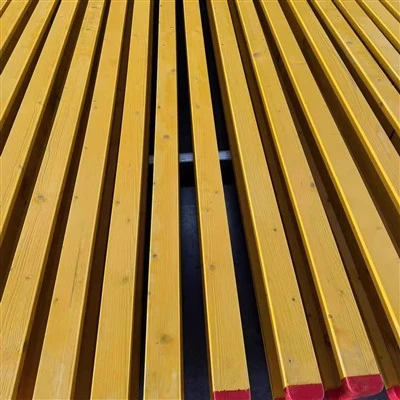
- End-Protection: The ends of an I-beam are the most vulnerable to damage. Export-grade products typically feature waterproof paint, red plastic end-caps, or metal sleeves to prevent the ends from cracking or chipping during handling and formwork stripping.
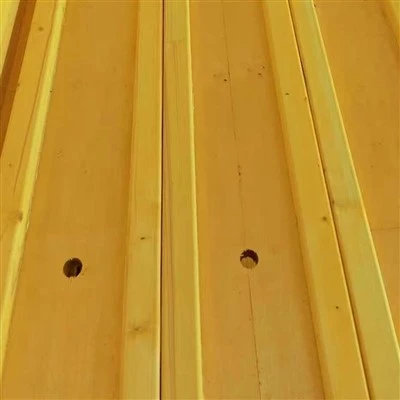
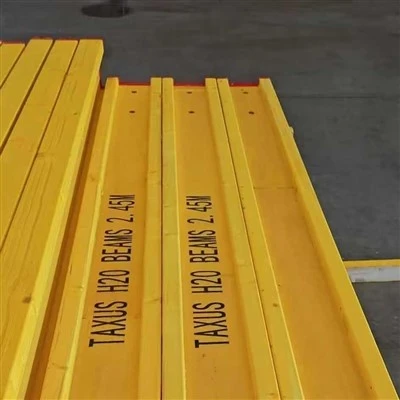
- Surface Treatment: The beams are coated with a yellow, waterproof, and wear-resistant paint. Some products also feature an additional phenolic coating on the top surface of the flanges; this prevents concrete from sticking during formwork removal, thereby reducing cleaning time and minimizing damage to the beam's surface.
"Our product is designed to withstand over 100 cycles of use," an exporter explains. "Of course, the actual number of uses depends on how the equipment is handled and stored on the construction site. But with a solid foundation, rental companies can have greater confidence."
3. The "Hidden Efficiency" of Lightweight Design
An H20 timber beam weighs approximately 5 kilograms per meter, meaning a 4.8-meter beam can be carried by just two people. For rental companies, this "lightness" translates into additional operational efficiency:
- Faster loading and unloading: Since the beams can be moved manually, there is no need for a crane, which reduces downtime spent waiting for heavy machinery.
- Greater flexibility on-site: Workers can shift or reposition the beams at any time without having to wait for a tower crane.
- Lower transportation costs: More beams can be loaded onto a single truck, reducing the per-unit transport cost.
"An Australian rental client once told me that what they value most is that 'workers are actually willing to move them,'" the exporter says. "If a beam is so heavy that it requires a crane to move, workers will naturally avoid shifting it, which inevitably lowers operational efficiency."
4. Another Key Concern for Rental Companies: Can They Be Repaired?
After repeated use, it is inevitable that H20 beams will sustain localized damage. The ability to repair them directly impacts their total service life.
"The structure of an H20 beam allows for a certain degree of repairability," a technician explains. "If the flange is damaged, the affected section can be cut off and the end refinished, allowing the beam to be 'down-rated' for use in shorter-span applications. If the web sustains minor damage, it can be addressed using specialized repair adhesive and reinforcement plates. Naturally, we do not recommend repairing beams that have sustained severe damage."
This "down-rating" capability enhances the residual value of a rental company's assets. A beam originally intended for long-span applications can, for instance, be shortened if its ends become damaged-allowing it to be repurposed for shorter spans or edge sections rather than being scrapped entirely.
5. Real-World Customer Feedback
"We compared beams from several suppliers and ultimately chose this company because their end-protection design is the most robust," says a formwork rental provider in Southeast Asia. "If the ends get damaged, the lifespan of the entire beam is significantly reduced. By using steel caps combined with waterproof paint, they've effectively eliminated issues at the ends."
"Increasing the number of reuse cycles creates more room for pricing," notes a client in the Middle East. "At the same rental rate, I can get a dozen or so extra uses out of their beams-that's where the profit comes from."
The competitiveness of H20 timber beams lies not in being "cheap," but in being "durable." When Chinese exporters invest effort into the "unseen" aspects-such as bonding processes, end protection, and surface treatment-they are helping rental companies focus on long-term value. This product philosophy-prioritizing longevity for the end user-is far more sustainable than any price war.