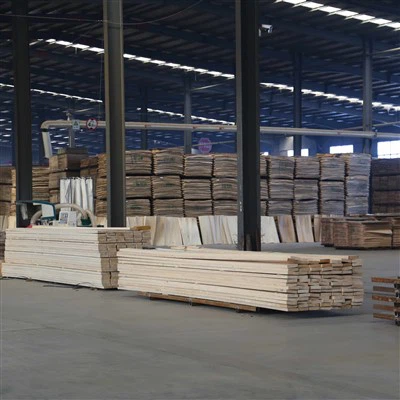
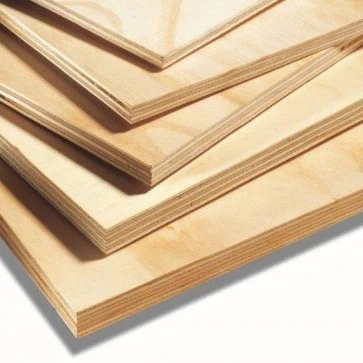
Hey there! I'm a supplier of laminated veneer lumber (LVL) beams, and I'm super excited to chat with you about how these awesome beams perform in fire.
First off, let's understand what LVL beams are. LVL beams are made by bonding multiple thin wood veneers together with adhesives under high pressure. This process creates a strong, stable, and consistent product that's widely used in construction for things like floor joists, headers, and beams.


Now, when it comes to fire performance, wood has some unique characteristics. Unlike steel, which can lose its strength rapidly when exposed to high temperatures, wood actually forms a char layer when it burns. This char layer acts as an insulator, slowing down the rate at which the fire penetrates deeper into the wood.
LVL beams benefit from this natural property of wood. The char layer that forms on the surface of an LVL beam during a fire helps to protect the inner layers of the beam. As the fire burns through the outer layers, the char layer thickens, providing additional insulation and maintaining the structural integrity of the beam for a longer period of time.
But it's not just about the char layer. The manufacturing process of LVL beams also plays a role in their fire performance. The adhesives used to bond the veneers together are designed to withstand high temperatures to a certain extent. They help to hold the veneers in place even as the outer layers of the beam are being consumed by the fire.
Let's talk about some real - world scenarios. In a building fire, the ability of an LVL beam to maintain its strength can be crucial. For example, in a multi - story building, LVL beams are often used to support floors and roofs. If these beams were to fail quickly in a fire, it could lead to the collapse of the entire structure. But because LVL beams have good fire resistance, they can buy valuable time for people to evacuate the building and for firefighters to control the blaze.
Now, I know you might be wondering how LVL beams compare to other building materials in terms of fire performance. Well, compared to solid wood, LVL beams are often more consistent in their fire resistance. Solid wood can have variations in density and moisture content, which can affect how it burns. LVL beams, on the other hand, are manufactured under controlled conditions, ensuring a more uniform product with predictable fire performance.
Compared to steel, as I mentioned earlier, LVL beams have an advantage in that they don't lose their strength as rapidly in high - temperature situations. Steel can start to deform and lose its load - bearing capacity at relatively low temperatures compared to the charring temperature of wood.
If you're in the market for LVL beams, we've got some great options for you. Check out our Super Stable LVL Beam. This beam is designed to be extra strong and stable, and it also has excellent fire - resistant properties.
Another great choice is our LVL Beams With A Solid Foundation. These beams are built to last and can provide reliable support even in challenging fire situations.
And if you're looking for a heavy - duty option, our Heavy - Duty LVL Beam for Wall and Slab Formwork is the way to go. It's specifically designed for use in demanding construction projects where fire resistance is a top priority.
When it comes to fire safety in construction, every detail matters. Choosing the right building materials can make a huge difference in the outcome of a fire. LVL beams offer a combination of strength, stability, and fire resistance that's hard to beat.
If you're interested in learning more about our LVL beams or if you're ready to start a project and need to purchase LVL beams, don't hesitate to reach out. We're here to answer all your questions and help you find the perfect LVL beams for your needs. Whether you're a contractor, an architect, or a DIY enthusiast, we've got the products and the expertise to support you.
So, if you're in the market for high - quality LVL beams with excellent fire performance, give us a shout. Let's work together to build safe and sustainable structures.
References
- "Fire Performance of Wood Structures", Forest Products Laboratory, USDA
- "Structural Laminated Veneer Lumber: Properties and Applications", Wood Products Council