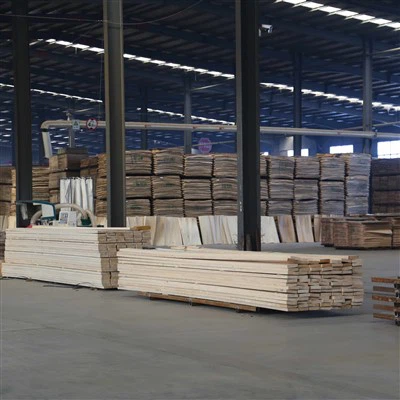
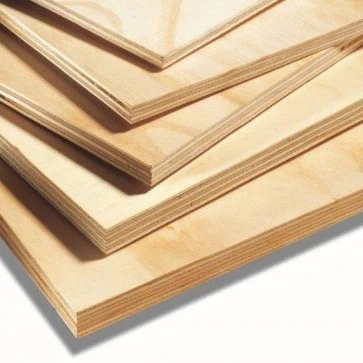
In the realm of construction, the choice of formwork material plays a pivotal role in ensuring the quality, durability, and cost - effectiveness of a project. One of the most promising materials in recent years is eco - friendly wood panels formwork that is waterproof. As a supplier of Eco Frendliy Wood Panels Formwork Waterproof, I am excited to delve into the topic of its bending strength and its significance in construction applications.


Understanding Bending Strength
Bending strength, also known as flexural strength, is a measure of a material's ability to resist deformation under a bending load. In the context of wood panels formwork, it refers to the maximum stress that the panel can withstand before it fails or undergoes excessive deflection when a force is applied perpendicular to its surface. This property is crucial because formwork is often subjected to various loads during the construction process, such as the weight of wet concrete, construction equipment, and workers.
The bending strength of a material is typically determined through standardized testing methods. For wood panels, the most common test is the three - point or four - point bending test. In a three - point bending test, a panel is supported at two ends and a load is applied at the mid - point. The load is gradually increased until the panel fails, and the maximum load and the corresponding deflection are recorded. From these measurements, the bending strength of the panel can be calculated.
Factors Affecting the Bending Strength of Eco - Friendly Wood Panels Formwork Waterproof
Wood Species
The type of wood used in the manufacturing of the panels has a significant impact on their bending strength. Different wood species have different inherent properties, such as density, fiber structure, and moisture content. For example, hardwoods generally have higher bending strength than softwoods due to their denser and more tightly packed fibers. Some common hardwoods used in eco - friendly wood panels formwork include oak, maple, and teak, while softwoods like pine and spruce are also popular choices.
Panel Construction
The way the wood panels are constructed also affects their bending strength. Panels can be made using different techniques, such as plywood, oriented strand board (OSB), or laminated veneer lumber (LVL). Plywood is made by gluing together multiple layers of thin wood veneers with the grain of adjacent layers perpendicular to each other. This cross - grain construction gives plywood excellent bending strength and dimensional stability. OSB, on the other hand, is made by compressing and gluing together strands of wood in a specific orientation. LVL is created by laminating thin wood veneers parallel to each other, resulting in a product with high strength and stiffness.
Waterproofing Treatment
The waterproofing treatment applied to the wood panels is another important factor. A good waterproofing treatment not only protects the panels from moisture damage but can also enhance their bending strength. Moisture can cause wood to swell, warp, and lose its strength over time. By applying a waterproof coating or impregnating the panels with a water - repellent substance, the panels can maintain their structural integrity even in wet conditions. For example, our Anti - Corrosion Black Coated Structural Panels Formwork is treated with a special black coating that provides excellent waterproofing and corrosion resistance, thereby improving its bending strength and durability.
Moisture Content
The moisture content of the wood panels has a direct impact on their bending strength. Wood is a hygroscopic material, which means it can absorb and release moisture depending on the surrounding environment. When the moisture content of the wood is too high, the wood fibers become soft and the panel's bending strength decreases. Conversely, if the moisture content is too low, the wood can become brittle and prone to cracking. Therefore, it is important to control the moisture content of the panels during manufacturing and storage to ensure optimal bending strength.
Importance of Bending Strength in Construction Applications
Concrete Pouring
During the pouring of concrete, the formwork must be able to support the weight of the wet concrete without excessive deflection. If the formwork has low bending strength, it may sag or deform under the weight of the concrete, resulting in uneven surfaces and poor - quality concrete structures. A formwork with high bending strength can ensure that the concrete is poured into a stable and well - defined shape, leading to better - finished products.
Reusability
High - strength formwork can be reused multiple times in different construction projects. This not only reduces the cost of construction but also has environmental benefits. Eco - friendly wood panels formwork with good bending strength can withstand the rigors of repeated use, such as handling, transportation, and installation, without significant damage. For example, our Black Shuttering Plywood for Construction is designed to be highly durable and reusable, making it a cost - effective and sustainable choice for construction projects.
Safety
In construction, safety is of utmost importance. Formwork with sufficient bending strength can prevent accidents caused by formwork collapse. A strong formwork can support the loads during construction, protecting workers and equipment from potential hazards. Therefore, ensuring the bending strength of the formwork is a crucial safety measure in any construction project.
Testing and Certification
To ensure the quality and performance of eco - friendly wood panels formwork waterproof, it is essential to conduct regular testing and obtain relevant certifications. Many countries and regions have established standards and regulations for the bending strength and other properties of construction materials. For example, in the United States, the American National Standards Institute (ANSI) and the American Wood Council (AWC) have developed standards for wood - based panels. In Europe, the European Committee for Standardization (CEN) has issued standards such as EN 310 for the determination of bending strength and modulus of elasticity of wood - based panels.
Certification bodies play an important role in verifying that the formwork meets the required standards. By obtaining certifications from recognized bodies, suppliers can provide assurance to their customers that their products are of high quality and reliable performance. As a supplier of eco - friendly wood panels formwork waterproof, we are committed to meeting and exceeding these standards to ensure the satisfaction of our customers.
Conclusion
The bending strength of eco - friendly wood panels formwork waterproof is a critical property that determines its performance in construction applications. It is affected by various factors, including wood species, panel construction, waterproofing treatment, and moisture content. A formwork with high bending strength can ensure the quality, safety, and cost - effectiveness of construction projects.
As a supplier of Eco Frendliy Wood Panels Formwork Waterproof, we understand the importance of providing high - quality products that meet the specific needs of our customers. Our panels are carefully manufactured using the best wood species and advanced production techniques, and they are treated with effective waterproofing agents to ensure excellent bending strength and durability.
If you are in the construction industry and are looking for a reliable and eco - friendly formwork solution, we invite you to contact us for more information. We are ready to discuss your project requirements and provide you with the best products and services. Let's work together to build a more sustainable and efficient construction future.
References
- ASTM D1037 - 12(2017) Standard Test Methods for Evaluating Properties of Wood - Based Fiber and Particle Panel Materials.
- EN 310:1993 Wood - based panels - Determination of bending strength and modulus of elasticity in bending.
- American Wood Council (AWC). National Design Specification (NDS) for Wood Construction.