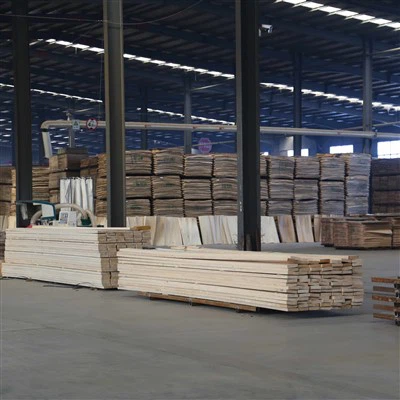
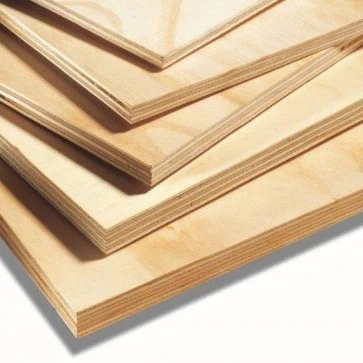
Hey there! As a supplier of Light - weight Wood Board formwork, I often get asked a bunch of technical questions. One that pops up quite a bit is about the Poisson's ratio of our Light - weight Wood Board formwork. So, let's dig into this topic and break it down.
First off, what the heck is Poisson's ratio? Well, it's a measure of how a material responds to stress. When you apply force to a material in one direction, it not only deforms in that direction but also in the perpendicular directions. Poisson's ratio is the negative ratio of the transverse strain (deformation in the perpendicular direction) to the axial strain (deformation in the direction of the applied force). In simpler terms, it tells you how much a material will "squish" sideways when you push or pull it.
Now, for our Light - weight Wood Board formwork, the Poisson's ratio is an important property. It affects how the formwork behaves under load. You see, when we're using these formworks in construction projects, they're going to be subjected to all sorts of forces. Whether it's the weight of wet concrete or the pressure from the construction process itself, the formwork needs to hold up.
The Poisson's ratio of our Light - weight Wood Board formwork typically falls within a certain range. Wood is an anisotropic material, which means its properties can vary depending on the direction. In the case of our formwork, the Poisson's ratio in the longitudinal direction (along the grain) is different from the transverse direction (across the grain).
In the longitudinal direction, the Poisson's ratio of our Light - weight Wood Board formwork is usually relatively low. This is because wood fibers in the longitudinal direction are more aligned, and they resist deformation in the perpendicular direction better. So, when you apply a force along the length of the formwork, it doesn't "squish" sideways as much.
On the other hand, in the transverse direction, the Poisson's ratio is a bit higher. The wood fibers are not as well - aligned in this direction, so the formwork is more likely to deform sideways when a force is applied. This is something we've taken into account during the manufacturing process. We've designed our Light - weight Wood Board formwork to have the right balance of strength and flexibility in both directions.
Let's talk about why this matters in real - world construction. When you're using our Light - weight Wood Board formwork to pour concrete, the formwork needs to maintain its shape. If the Poisson's ratio is too high in the wrong direction, the formwork could bulge or warp, which would lead to an uneven surface on the concrete. And that's a big no - no in construction.
Our formwork's Poisson's ratio also affects its durability. If the formwork deforms too much under load, it can lead to premature wear and tear. This means you'd have to replace the formwork more often, which can be costly and time - consuming. But with our carefully engineered Light - weight Wood Board formwork, you can count on it to last through multiple uses.
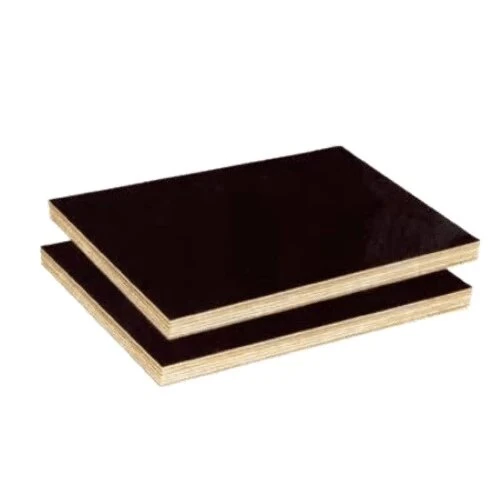
Now, I want to mention some of the other great features of our products. We also offer 1220*2440 Marine Film Faced Formwork Plywood. This type of formwork has a special film coating that makes it resistant to water and chemicals. It's perfect for construction projects in wet or harsh environments.
And then there's our E0 Eucalyptus Wood Panels Formwork. Eucalyptus wood is known for its strength and stability. Our E0 - grade formwork is made with low - emission materials, which is great for the environment and the health of the workers on the construction site.
So, if you're in the market for high - quality formwork, you've come to the right place. Our Light - weight Wood Board formwork, with its well - defined Poisson's ratio and other great properties, is a top choice for construction projects of all sizes. Whether you're building a small residential home or a large commercial building, our formwork can get the job done.
If you're interested in learning more about our products or have any questions about the Poisson's ratio or other technical aspects, don't hesitate to reach out. We're here to help you make the best choice for your construction needs. Let's start a conversation and see how our Light - weight Wood Board formwork can benefit your next project.

References
- "Mechanics of Materials" by Ferdinand P. Beer, E. Russell Johnston Jr., John T. DeWolf, and David F. Mazurek
- "Wood Handbook: Wood as an Engineering Material" by the Forest Products Laboratory