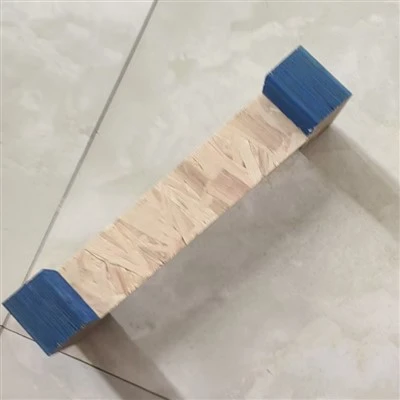
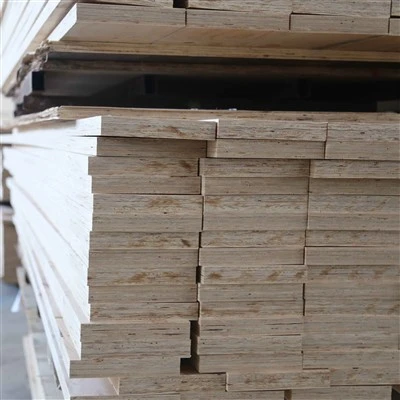
On an overseas construction site, workers face a pile of timber of varying lengths, requiring repeated measurements, cutting, and adjustments-a time-consuming, labor-intensive process prone to errors. How can materials be installed immediately upon arrival on-site, matching their specifications perfectly? Chinese LVL exporters are using a "modular" approach to transform complex on-site processing into a simple "puzzle game."
1. "Cutting Waste" on Construction Sites
In traditional construction, material wastage is an underestimated cost. Statistics show that due to inaccurate on-site cutting, size mismatches, and calculation errors, the actual wastage rate of timber structures can reach 5-10%. For a large project, this translates to tens of thousands of dollars in wasted resources.
"Our workers spend a lot of time every day measuring and cutting. Sometimes, if they cut incorrectly, the entire piece of material is ruined," a Filipino project manager said helplessly. "What's more troublesome is that cutting accuracy directly affects structural safety, and the skill level of workers varies greatly, making it difficult to guarantee quality."
2. Modular Thinking: Making Materials Come with Their Own "Installation Manual"
Chinese LVL exporters are using a simple and effective method to solve this problem: modular design and prefabrication.
- **Unified Modulus:** Based on the internationally accepted 600mm, 1200mm, or 16-inch (406mm), 24-inch (610mm) modular system, product lengths are designed as integer multiples or simple fractions of these modules. This eliminates the need for complex calculations on-site, as materials naturally match.
- **Prefabricated Connection Points:** Connection holes and slots are pre-drilled and marked at the factory. Workers only need to align the bolts on-site, eliminating the need for on-site drilling, resulting in high precision and speed.
- **Numbering System:** Each component has a unique number corresponding to its location on the drawings. Workers, like piecing together a jigsaw puzzle, located the positions according to the numbers and installed them directly.
3. From "General-Purpose Materials" to "Special-Purpose Components"
Modular thinking is changing product design methods:
- Prefabricated roof rafters: Based on the roof slope provided by the customer, the ends are pre-cut at the factory with the installation direction marked. On-site workers simply lift them onto the roof, align them, and fix them in place.
- Pre-cut wall joists: The joists are precisely cut to the length according to the wall height, and pipe holes are pre-drilled at the corresponding locations. During on-site installation, workers do not need secondary processing; they can directly erect and fix them.
- Prefabricated stair beams: Based on the height and depth of the stair treads, the tread grooves are pre-cut in the factory. During on-site installation, the treads are simply inserted into the grooves; no on-site grooving is required.
4. Packaging for "Foolproof" Installation
To truly achieve "foolproof" installation of modular products, Chinese manufacturers have focused on packaging:
- **Packaging by Area:** Components from the same construction area (e.g., walls in area A, roof in area B) are packaged together and labeled with area tags. Workers unpack according to area, avoiding confusion.
- **Installation Sequence Instructions:** Each bundle includes simple installation sequence instructions, such as "Erect columns first, then beams, and finally supports," making it clear to workers.
- **Enlarged Diagrams of Key Nodes:** For complex connection nodes, a large, waterproof, detailed diagram is included, clearly indicating the connection method and precautions.
5. Real Customer Value
This modular design brings tangible value to customers:
- **Shorter Construction Time:** A Malaysian developer stated that after adopting prefabricated modular LVL, the frame installation time for a two-story residential building was reduced from 10 days to 4 days.
- **Reduced Labor Costs:** No highly skilled carpenters are needed; ordinary workers can be trained quickly and efficiently. Labor costs can be reduced by 30-40%.
- Material waste is reduced: On-site cutting is reduced, and the material loss rate drops from 8% to below 2%.
- Quality is more guaranteed: Factory prefabrication ensures processing precision, and on-site installation only requires matching components, resulting in more reliable structural quality.
6. Future Direction: From Modular to Parametric
Some leading manufacturers are exploring further "parametric" services:
- Cloud-based selection: Customers input parameters such as building dimensions, span, and load on the website, and the system automatically generates the optimal component specifications and layout scheme.
- Automatic drawing generation: After the scheme is confirmed, the system automatically generates processing and installation drawings, eliminating the need for manual drawing.
- Component QR codes: Each component has a QR code; scanning the code reveals its location, connection method, installation points, and other information.
"Making the complex simple, making the professional commonplace." This is the "foolproofing" philosophy that Chinese LVL manufacturers are pursuing. When construction workers no longer need complex calculations and measurements, but can complete the installation as easily as playing a jigsaw puzzle, both construction efficiency and quality experience a qualitative leap. This wisdom of simplifying complexity is one of the core competitive advantages of Chinese manufacturing serving the global market.