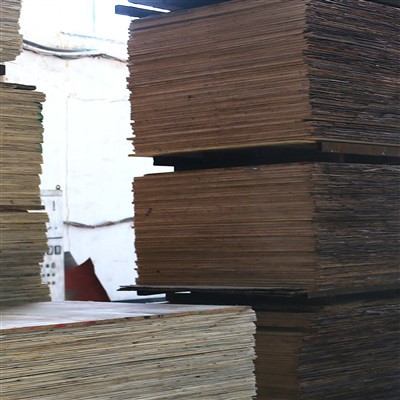
The moisture content of wood, a seemingly simple indicator, is the core secret to its stable use in different climate zones around the world. From the arid deserts of the Middle East to the humid rainforests of Southeast Asia, from the cold of Northern Europe to the heat of the equator, Chinese LVL manufacturers have achieved true global applicability by using precise moisture content control technology to enable their products to "adapt" to various extreme climates.
1. The "Breathing" of Wood and the Secrets of Moisture Content
Wood is a material that "breathes." It absorbs or releases moisture according to changes in environmental humidity, leading to dimensional changes, cracking, or deformation. This characteristic has been a perpetual challenge for timber-framed construction for centuries.
In LVL production, moisture content control is the most fundamental and critical technology. It determines the "initial state" of the product upon leaving the factory and also affects its "long-term performance" after arriving at its destination.
"Many customers don't understand why the same batch of products shipped to Saudi Arabia and Indonesia has different performance," explained a factory technical director with over ten years of experience in LVL exports. "The fundamental reason is that the moisture content wasn't adjusted for the destination."
2. From "One-Size-Fits-All" to "Precise Adaptation"
In the past, Chinese LVL exports typically used a "one-size-fits-all" moisture content standard-around 12% regardless of the destination. While simple, this approach is ill-suited to the diverse global climate conditions.
Leading exporters are now implementing a "destination-appropriate" strategy:
- **Dry Regions Only (Middle East, North Africa, Australian Outback):** The moisture content at the factory is controlled at 8-10%. In these regions, air humidity is consistently below 30%. If the wood's moisture content is too high, it will rapidly lose moisture upon arrival, leading to severe cracking. Lowering the initial moisture content allows the wood to adapt to the environment more quickly, reducing the risk of cracking.
- **Humid Regions Only (Southeast Asia, South American Coast, West Africa):** The moisture content at the factory is controlled at 12-14%. In these regions, humidity is often above 80%. If the wood's moisture content is too low, it will absorb a large amount of moisture and expand upon arrival, causing warping and deformation. Appropriately increasing the initial moisture content reduces moisture absorption and expansion, maintaining dimensional stability.
- **Temperature Regions Only (Europe, North America, Japan & Korea):** Maintaining a standard range of 10-12% is close to the average equilibrium moisture content of these regions, ensuring the best adaptability.
3. Data-Driven "Climate Maps"
To achieve precise adaptation, some factories have even created global "climate maps," marking data such as average humidity, extreme humidity, and seasonal variations in major export markets.
"Based on our customers' historical orders, we analyze usage feedback from different regions and continuously adjust our moisture content control parameters," said a factory quality control manager. "For example, our products shipped to Dubai previously had a high rate of cracking complaints. Later, we reduced the moisture content from 12% to 9%, and the complaint rate dropped by 80%."
This data-driven, refined control is becoming a new competitive advantage for Chinese LVL exports.
4. From "Passive Adaptation" to "Proactive Guidance"
Besides adjusting the factory moisture content, Chinese manufacturers are exploring more proactive guidance methods:
- Moisture Content Labeling: The factory moisture content and recommended acclimatization time are labeled on each bundle of product packaging. "It is recommended to let the material acclimate in the local environment for 3-5 days before use." This reminder effectively reduces problems caused by improper handling.
- Upgraded End Sealing: For dry areas, the end sealant is made more flexible to prevent end cracking due to rapid water loss; for humid areas, the end sealant is made more waterproof to prevent rapid water penetration from the ends.
- Stage Unpacking Recommendation: As shown in the packaging diagram, upon arrival, first open both ends of the packaging to allow ventilation, allowing the material to slowly adapt to the ambient humidity. Completely unpack and use the material after 24-48 hours.
5. Customer Testimonials
"Previously, we had a lot of headaches with cracking and warping issues when sourcing timber from different countries," said a Dubai builder. "Now, Chinese suppliers specifically ask us whether the shipment is destined for Dubai or Abu Dhabi, inland or coastal, and adjust the moisture content based on our answers. This meticulous attention gives us peace of mind."
"We have a rainy season for half the year here, and the timber we used to buy often got moldy and warped," said an Indonesian building materials supplier. "Later, the supplier recommended a moisture content suitable for humid regions and added anti-mold treatment, which basically solved the problem."
Moisture content control, this seemingly basic technical detail, is becoming a powerful tool for Chinese LVL manufacturers to conquer the global market. When products can precisely adapt to the needs of different climate zones, they embody not only timber but also a profound understanding of the usage scenarios of global customers. This meticulous service, tailored to different climates, is a vivid portrayal of Chinese manufacturing moving from "mass-produced goods" to "precise matching."