What is the torsional strength of easy - to - release construction formwork plywood?
As a supplier of Easy - to - release Construction Formwork Plywood, I often receive inquiries from construction professionals about the various properties of our products, and one question that frequently comes up is about the torsional strength of our formwork plywood. In this blog, I will delve into what torsional strength is, why it matters in construction formwork, and how our easy - to - release construction formwork plywood performs in terms of torsional strength.
Understanding Torsional Strength
Torsional strength refers to the maximum amount of torque or twisting force that a material can withstand before it fails. In the context of construction formwork plywood, torsional strength is crucial because formwork is often subjected to complex loading conditions during the construction process. When concrete is poured into the formwork, it exerts pressure in multiple directions, including twisting forces that can cause the formwork to deform or even break if it does not have sufficient torsional strength.
Formwork that lacks adequate torsional strength may lead to a variety of problems. For example, it can result in uneven concrete surfaces, which not only affects the aesthetic appearance of the finished structure but also compromises its structural integrity. Additionally, formwork failure due to insufficient torsional strength can lead to delays in construction projects, increased costs for repairs and replacements, and potential safety hazards for construction workers.
Factors Affecting the Torsional Strength of Construction Formwork Plywood
Several factors influence the torsional strength of construction formwork plywood. One of the primary factors is the type of wood used in the plywood. Different wood species have varying degrees of strength and stiffness, which directly impact the torsional strength of the plywood. For instance, hardwoods generally have higher strength properties compared to softwoods, and plywood made from high - quality hardwoods is likely to have better torsional strength.
The manufacturing process also plays a significant role in determining the torsional strength of the plywood. Properly glued and pressed plywood panels are more likely to have consistent strength throughout the panel, which enhances its ability to resist torsional forces. Our easy - to - release construction formwork plywood is manufactured using advanced techniques that ensure strong bonding between the wood layers, resulting in a product with excellent torsional strength.
The thickness of the plywood is another important factor. Thicker plywood panels typically have higher torsional strength because they can better distribute the applied twisting forces. However, it's important to balance the thickness with other considerations such as weight and cost, as thicker plywood may be heavier and more expensive.
Torsional Strength of Our Easy - to - Release Construction Formwork Plywood
Our easy - to - release construction formwork plywood is designed to meet the high demands of the construction industry, including excellent torsional strength. We use high - quality wood species that are carefully selected for their strength and durability. Through a rigorous manufacturing process, we ensure that each panel has a uniform structure and strong bonding between the layers.
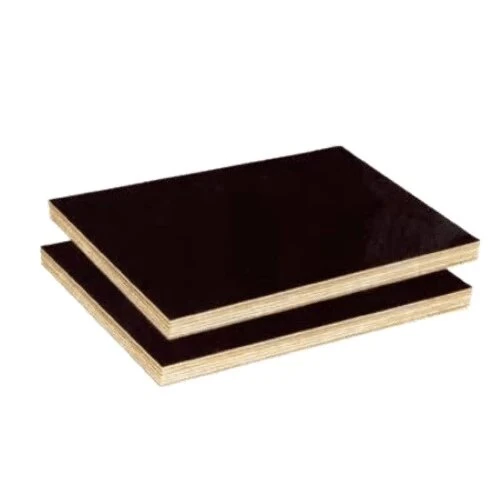

In tests, our formwork plywood has demonstrated remarkable torsional strength. It can withstand significant twisting forces without showing signs of deformation or failure, even under the most challenging construction conditions. This means that when you use our formwork plywood, you can have confidence that it will maintain its shape and integrity during the concrete pouring process, resulting in a high - quality finished product.
Applications and Benefits
The high torsional strength of our easy - to - release construction formwork plywood makes it suitable for a wide range of construction applications. It can be used in the construction of high - rise buildings, bridges, dams, and other large - scale projects where the formwork is subjected to complex loading conditions.
One of the key benefits of our formwork plywood is its easy - to - release feature. After the concrete has set, the formwork can be easily removed without causing damage to the concrete surface or the formwork itself. This not only saves time and labor but also allows the formwork to be reused multiple times, reducing overall construction costs.
In addition to its torsional strength and easy - to - release feature, our formwork plywood also offers other advantages. It has excellent anti - corrosion properties, which is especially important in environments where the formwork may be exposed to moisture or chemicals. You can learn more about our Anti - Corrosion Black Coated Structural Panels Formwork. Our products are also known for their high quality and reliability, making them a preferred choice for engineering projects. Check out our Best Quality Structural Panels Formwork for Engineering. And if you are looking for a specific size, our 1220*2440 Marine Film Faced Formwork Plywood is a great option.
Contact Us for Procurement
If you are in the market for high - quality easy - to - release construction formwork plywood with excellent torsional strength, we invite you to contact us for procurement. Our team of experts is ready to assist you in selecting the right product for your specific construction needs. Whether you have a small - scale project or a large - scale infrastructure development, we can provide you with the formwork solutions that meet your requirements.
References
- "Wood Handbook: Wood as an Engineering Material." Forest Products Laboratory, United States Department of Agriculture.
- "Design and Construction of Concrete Formwork." American Concrete Institute.