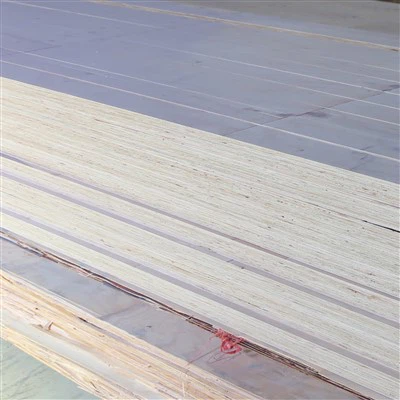
Structural plywood is a vital material in modern construction and engineering, and its performance directly impacts the safety and durability of structures. Therefore, material selection requires a comprehensive consideration of mechanical properties, environmental adaptability, and economic efficiency to ensure the reliability of the final product.
First, the wood type is a key factor in determining the fundamental performance of structural plywood. Commonly used species include fir, pine, birch, and tropical hardwoods (such as meranti). Fir and pine are widely used in general building structures due to their uniform texture, moderate strength, and low cost. Birch and tropical hardwoods, however, are suitable for applications with high load-bearing requirements, such as bridge formwork or high-rise building support structures, due to their high density and high elastic modulus.
Second, the adhesive type directly impacts the plywood's durability and moisture resistance. Phenolic resin (PF) adhesives offer excellent water and high-temperature resistance, making them suitable for outdoor or humid environments. Urea-formaldehyde resin (UF) is less expensive but has poor water resistance and is primarily used in non-load-bearing interior structures. Melamine-modified urea-formaldehyde resin (MUF) offers a balance of strength and weather resistance, making it a common choice for mid- to high-end applications.

In addition, the number of plies and grain direction must be carefully designed. Structural plywood typically uses an odd number of veneers in a staggered lamination pattern to ensure isotropy and minimize deformation. The grain of the surface veneer should align with the direction of load to maximize load-bearing capacity.
Finally, environmental protection and certification standards must not be overlooked. High-quality structural plywood should comply with international standards (such as BS EN 636 or ANSI/APA standards), and low-formaldehyde-emitting adhesives (such as E0 or E1 grades) are preferred to meet green building requirements.
In summary, the material selection of structural plywood needs to be based on the specific application scenario, seeking the best balance between wood properties, adhesive performance, process design and environmental requirements to ensure structural safety and long-term durability.