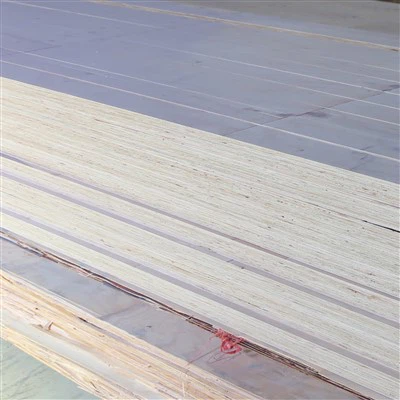
Structural plywood, a high-strength engineering material, is widely used in construction, furniture, and industrial manufacturing. Its performance stability and service life depend largely on proper storage. Improper storage conditions can cause the plywood to deform, delaminate, or become damp, affecting its mechanical properties and appearance. Therefore, scientific storage management is crucial.
First, environmental control is a key element in the storage of structural plywood. Plywood should be stored in a dry, ventilated indoor environment, away from direct sunlight and extreme temperature fluctuations. The ideal storage temperature range is 10°C to 30°C, and the relative humidity should be maintained between 40% and 60%. Excessive humidity causes the plywood to absorb moisture and expand, while excessively low humidity can cause it to dry out and crack.
Second, the stacking method directly affects the stability of the plywood. Plywood should be stored flat on flat, sturdy pallets or racks, away from direct contact with the ground, to prevent moisture and deformation. The spacing between skids should be minimal, typically no more than 1 meter, to ensure even load distribution across the boards. If upright storage is required, the boards must be vertically stable and protected from tipping, preventing damage due to an unstable center of gravity.

Protective measures are also crucial. For long-term storage, it is recommended to cover the boards with moisture-proof plastic film or non-woven fabric to prevent corrosion from dust, oil, and chemicals. For short-term storage, adequate ventilation is recommended, but strong winds should be avoided, which could cause rapid surface desiccation.
Finally, regular inspection is crucial to ensuring the quality of plywood. Check the condition of the boards regularly during storage. If signs of moisture, mildew, or deformation are observed, adjust the storage environment or implement drying or repair measures.
In summary, the proper storage of structural plywood relies on environmental control, proper stacking, effective protection, and regular maintenance. Following these principles can maximize its service life and ensure reliable performance in engineering applications.