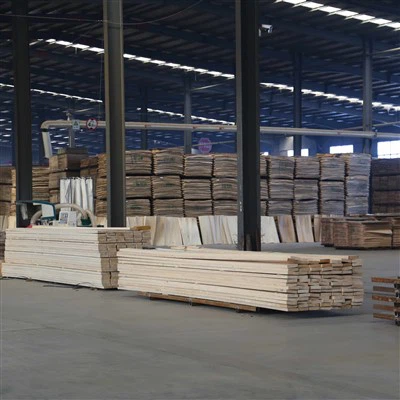
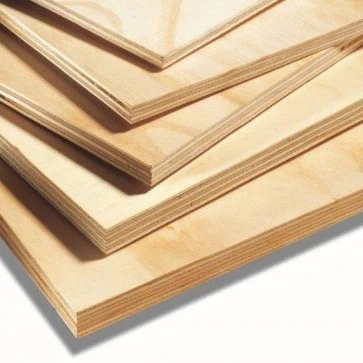
E0 eucalyptus wood panels formwork has gained significant popularity in the construction industry due to its environmental - friendliness, high strength, and cost - effectiveness. However, a common question that arises among contractors and construction professionals is whether E0 eucalyptus wood panels formwork can be used for curved surfaces. As a leading supplier of E0 eucalyptus wood panels formwork, I'll delve into this topic in detail.
1. Characteristics of E0 Eucalyptus Wood Panels Formwork
E0 eucalyptus wood panels formwork is made from high - quality eucalyptus wood, which is known for its straight grain and relatively high density. The E0 grade indicates that the formaldehyde emission of the panel is extremely low, making it a safe and eco - friendly choice for construction projects. These panels are typically treated with special coatings or films to enhance their water resistance, durability, and ease of demolding.
The formwork panels are available in various thicknesses and sizes, allowing for flexibility in different construction applications. They are strong enough to withstand the pressure exerted by wet concrete during the casting process, ensuring the stability and accuracy of the concrete structure.
2. Challenges of Using Formwork for Curved Surfaces
When it comes to curved surfaces, there are several challenges that need to be addressed. Firstly, the formwork needs to be able to conform to the specific curvature of the desired surface. Unlike flat surfaces, curved surfaces require the formwork to bend smoothly without cracking or breaking.
Secondly, the joints between the formwork panels on curved surfaces need to be carefully designed and sealed to prevent concrete leakage. Improperly sealed joints can lead to surface defects on the finished concrete structure, such as honeycombing or unevenness.
Thirdly, the structural integrity of the formwork on curved surfaces must be maintained. The formwork should be able to support the weight of the wet concrete and any external forces during the construction process, without collapsing or deforming.
3. Can E0 Eucalyptus Wood Panels Formwork Be Used for Curved Surfaces?
The answer is yes, but with certain limitations and considerations.
Advantages of Using E0 Eucalyptus Wood Panels Formwork for Curved Surfaces
- Flexibility: Eucalyptus wood has a certain degree of flexibility, which allows the formwork panels to be bent to a certain extent. With proper pre - treatment and bending techniques, the E0 eucalyptus wood panels can be shaped to fit gentle curves. For example, in some small - scale architectural projects with relatively small - radius curves, such as the curved facades of small pavilions or decorative elements, E0 eucalyptus wood panels formwork can be a viable option.
- Cost - effective: Compared to some specialized formwork materials for curved surfaces, such as steel or fiberglass, E0 eucalyptus wood panels formwork is more cost - effective. This makes it an attractive choice for projects with budget constraints.
- Ease of processing: Wood is a material that is relatively easy to cut, shape, and join. Contractors can use common woodworking tools to modify the E0 eucalyptus wood panels formwork to fit the specific requirements of the curved surfaces.
Limitations
- Limited curvature: E0 eucalyptus wood panels have a limit to how much they can be bent. Sharp or large - radius curves may cause the panels to crack or break. Therefore, they are more suitable for gentle curves rather than complex or extreme curvatures.
- Moisture and durability: When used for curved surfaces, the formwork may be more exposed to moisture and mechanical stress. Although the E0 eucalyptus wood panels are treated to be water - resistant, long - term exposure to wet conditions may still affect their durability. In addition, repeated bending and shaping may weaken the structural integrity of the panels over time.
4. Tips for Using E0 Eucalyptus Wood Panels Formwork on Curved Surfaces
Pre - bending and Shaping
- Pre - soaking: Soaking the E0 eucalyptus wood panels in water for a certain period can increase their flexibility. However, it is important to control the soaking time to avoid excessive moisture absorption, which may lead to warping or delamination.
- Gradual bending: Instead of trying to bend the panels to the desired curvature all at once, it is better to bend them gradually in multiple steps. This helps to prevent sudden cracking or breaking.
Joint Design and Sealing
- Proper joint layout: Design the joints between the formwork panels in a way that minimizes stress concentration at the curved areas. For example, use staggered joints to distribute the load more evenly.
- Sealing materials: Use high - quality sealing materials, such as silicone sealants, to seal the joints between the panels. This helps to prevent concrete leakage and ensures the smoothness of the finished concrete surface.
Structural Support
- Reinforcement: For larger or more complex curved surfaces, additional reinforcement may be required. This can be achieved by using wooden or metal supports to strengthen the formwork and maintain its structural integrity.
5. Comparison with Other Formwork Materials for Curved Surfaces
- Steel formwork: Steel formwork is very strong and can be used for a wide range of curvatures, including sharp and large - radius curves. However, it is more expensive and heavier than E0 eucalyptus wood panels formwork. Steel formwork also requires specialized equipment for installation and removal.
- Fiberglass formwork: Fiberglass formwork is lightweight, corrosion - resistant, and can be easily molded into complex shapes. But it is relatively more expensive than wood formwork and may not be as readily available in some regions.
6. Applications of E0 Eucalyptus Wood Panels Formwork on Curved Surfaces
- Architectural elements: As mentioned earlier, E0 eucalyptus wood panels formwork can be used for the construction of small - scale architectural elements with gentle curves, such as curved columns, arches, or decorative facades.
- Landscape construction: In landscape projects, such as the construction of curved benches, flower beds, or small retaining walls, E0 eucalyptus wood panels formwork can be used to create the desired shapes at a lower cost.
7. Our Product Offerings
As a supplier of E0 eucalyptus wood panels formwork, we offer a variety of products that can be considered for curved surface applications. Our Easy - to - release Construction Formwork Plywood is designed with a special surface treatment that allows for easy demolding, which is especially important when working with curved surfaces. The smooth surface of this plywood also helps to achieve a better finish on the concrete.
Our Black Shuttering Plywood for Construction is another option. It has excellent water - resistance and durability, which can withstand the harsh conditions during the construction of curved surfaces.
In addition, our Film Faced Shuttering Plywood for Construction is coated with a high - quality film that not only enhances the water - resistance but also provides a smooth surface for better concrete finish.


8. Conclusion and Call to Action
In conclusion, E0 eucalyptus wood panels formwork can be used for curved surfaces, but it has its limitations. It is a cost - effective and flexible option for projects with gentle curves, especially in small - scale architectural and landscape construction.
If you are considering using E0 eucalyptus wood panels formwork for your curved surface projects, we are here to provide you with high - quality products and professional advice. Our team of experts can help you determine the most suitable formwork solution based on your specific requirements. Contact us today to start a procurement discussion and take the first step towards a successful construction project.
References
- "Construction Formwork Engineering Handbook", various authors, Construction Publication Inc.
- "Wood in Construction: Properties and Applications", Wood Research Institute, Timber Press.