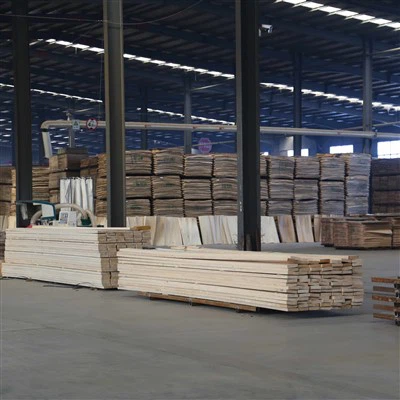
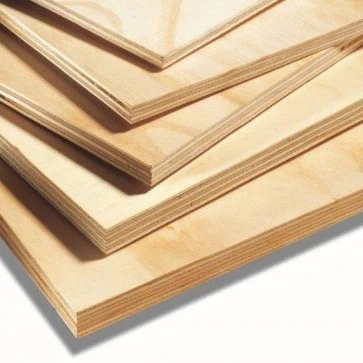
Yo, what's up everyone! As a supplier of E0 Eucalyptus Wood Panels Formwork, I'm super stoked to chat with you about how these bad boys perform under cyclic loading.


First off, let me give you a quick rundown on what cyclic loading is. Cyclic loading is basically when a structure or material is subjected to repeated loading and unloading. This can happen in a whole bunch of real - world scenarios, like in buildings that are constantly shaken by wind or seismic activity, or in bridges that have vehicles passing over them day in and day out.
So, how does our E0 Eucalyptus Wood Panels Formwork hold up in these situations? Well, let me tell you, it's pretty impressive. Eucalyptus wood has some unique properties that make it a great choice for formwork, especially when it comes to cyclic loading.
One of the key features of eucalyptus wood is its high strength - to - weight ratio. This means that even though the panels are relatively light, they can still handle a good amount of stress. When it comes to cyclic loading, this is a huge advantage. The panels don't get overly fatigued easily because they're not carrying a lot of unnecessary weight. They can flex and bend a bit under the repeated loads, but they're strong enough to bounce back without getting damaged.
Another thing is the E0 grade. The E0 grade indicates that the panels have extremely low formaldehyde emissions. This is not only great for the environment and the health of the workers on the construction site, but it also has an impact on the panel's durability. Low formaldehyde levels mean that the wood's natural structure is less likely to be degraded over time. So, when it's facing cyclic loading, the panel maintains its integrity better.
Let's talk about some of the tests we've done. We put our E0 Eucalyptus Wood Panels Formwork through a series of cyclic loading tests in our lab. We simulated different levels of stress and different frequencies of loading, just like what they'd face in real - world construction projects.
In the low - frequency cyclic loading tests, the panels showed excellent resistance. They were able to withstand hundreds of cycles without any visible signs of cracking or delamination. The wood's natural fibers seemed to work together to distribute the stress evenly across the panel. This is crucial because uneven stress distribution can lead to weak spots and eventually cause the panel to fail.
When we increased the frequency of the cyclic loading, things got a bit more challenging. But our E0 Eucalyptus Wood Panels Formwork still held up pretty well. There was a small amount of wear and tear, but it was far less than what we saw in some other types of formwork materials we tested. The panels were still able to maintain their shape and structural stability, which is essential for ensuring the quality of the concrete structures they're used to form.
Now, I know you might be thinking, "That's all well and good, but what about other types of formwork out there?" Well, let me introduce you to some of our other great products. We also offer High Quality Pine Structural Wood Panels Formwork. Pine is a popular choice for formwork because it's readily available and has good strength. These pine panels are also great for cyclic loading, especially in less demanding applications.
If you're looking for something a bit more specialized, we have Film Faced Shuttering Plywood for Construction. The film facing provides an extra layer of protection against moisture and abrasion, which can be really helpful when the formwork is going to be exposed to harsh conditions during cyclic loading.
And for those projects where corrosion is a concern, we've got Anti - Corrosion Black Coated Structural Panels Formwork. This coating not only protects the panels from rust and corrosion but also adds to their overall durability under cyclic loading.
In real - world construction projects, our E0 Eucalyptus Wood Panels Formwork has proven its worth time and time again. For example, in a high - rise building project, the formwork was used to create the concrete columns and walls. The building was in an area prone to strong winds, which meant the formwork was constantly under cyclic loading. Despite this, the panels remained in good condition throughout the construction process. They didn't warp or break, and they were able to be reused multiple times, which saved the construction company a lot of money.
Another project was a bridge construction. The formwork was used to shape the concrete beams. With the constant traffic passing over the bridge during construction, the formwork faced cyclic loading from the vibrations. Our E0 Eucalyptus Wood Panels Formwork handled it like a champ. The beams came out with a smooth finish, and the panels could be easily removed and cleaned for future use.
So, if you're in the market for high - quality formwork that can stand up to cyclic loading, you've come to the right place. Our E0 Eucalyptus Wood Panels Formwork, along with our other great products, are designed to meet the toughest construction challenges. Whether you're working on a small residential project or a large - scale commercial development, we've got the formwork solutions for you.
If you're interested in learning more about our products, or if you want to discuss your specific project requirements, don't hesitate to reach out. We're always happy to have a chat and help you find the perfect formwork for your needs. Let's start a conversation and see how we can work together to make your construction project a success!
References:
- Construction Materials Handbook: Properties, Specifications, and Testing. McGraw - Hill.
- Wood Engineering and Construction Handbook. Wiley.