What is the strength of structural wood panels formwork in different directions?
As a supplier of structural wood panels formwork, I've witnessed firsthand the critical role these materials play in construction projects. Understanding the strength of structural wood panels formwork in different directions is essential for ensuring the safety and efficiency of any building endeavor. In this blog post, I'll delve into the intricacies of this topic, exploring how the orientation of these panels can impact their performance and why it matters for your construction needs.
Anisotropic Nature of Wood Panels
Structural wood panels formwork, such as plywood and oriented strand board (OSB), are anisotropic materials. This means that their mechanical properties, including strength and stiffness, vary depending on the direction in which they are loaded. Unlike isotropic materials, like steel or concrete, which have the same properties in all directions, wood panels exhibit different characteristics parallel and perpendicular to the grain or the orientation of the strands.
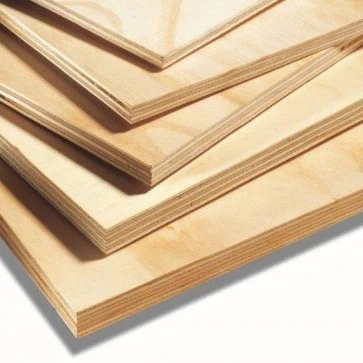
The anisotropy of wood panels is primarily due to their manufacturing process. In plywood, thin layers of wood veneer are glued together with the grain of adjacent layers oriented at right angles to each other. This cross - lamination enhances the panel's strength and dimensional stability. OSB, on the other hand, is made from strands of wood that are oriented in specific directions during the manufacturing process, typically with the outer layers having strands aligned parallel to the panel's length.
Strength Parallel to the Grain or Strand Orientation
When a structural wood panel formwork is loaded parallel to the grain (in plywood) or the predominant strand orientation (in OSB), it generally exhibits higher strength and stiffness. This is because the wood fibers or strands are better aligned to resist the applied load. For example, in a plywood panel, the longitudinal direction (parallel to the grain of the outer veneers) can withstand greater bending and tensile forces compared to the transverse direction.
In construction applications, this property is often exploited when the formwork needs to support heavy loads, such as in large - scale concrete pouring for high - rise buildings or bridge decks. Using the panels with the stronger direction aligned with the expected load path can significantly increase the load - carrying capacity of the formwork system. For instance, if you are constructing a beam formwork, placing the plywood panels with their strong direction along the length of the beam can better resist the bending moments generated by the wet concrete.
Strength Perpendicular to the Grain or Strand Orientation
The strength of structural wood panels formwork perpendicular to the grain or strand orientation is generally lower than in the parallel direction. This is because the wood fibers or strands are not as well - aligned to resist the load, and the glue bonds between the layers or strands are more likely to be stressed. In plywood, the transverse direction may have lower bending and shear strength, which can limit its ability to support certain types of loads.
However, the cross - lamination in plywood and the multi - directional orientation of strands in OSB still provide a reasonable level of strength in the perpendicular direction. This is important in construction, as formwork often experiences loads from multiple directions. For example, during the concrete pouring process, the formwork may be subjected to lateral pressure from the wet concrete, which acts perpendicular to the panel's surface. The panels need to have sufficient strength in this direction to prevent buckling or failure.
Impact on Construction Applications
The difference in strength in different directions has significant implications for construction applications. When designing a formwork system, engineers and contractors need to carefully consider the orientation of the structural wood panels to ensure that the formwork can safely support the expected loads.
In addition, the strength in different directions also affects the handling and installation of the formwork. Panels should be installed with the correct orientation to maximize their performance. For example, when installing plywood panels on a wall formwork, it is important to ensure that the strong direction is properly aligned with the expected load path. Otherwise, the formwork may not be able to withstand the pressure of the wet concrete, leading to potential failures.
Our Product Offerings
As a supplier of structural wood panels formwork, we offer a wide range of products to meet the diverse needs of our customers. Our Film Faced Shuttering Plywood for Construction is designed to provide excellent strength and durability, with a special film coating that protects the panel from moisture and abrasion. The cross - laminated structure of our plywood ensures good strength in both parallel and perpendicular directions, making it suitable for a variety of construction applications.


We also offer E0 Eucalyptus Wood Panels Formwork, which is made from high - quality eucalyptus wood. This product has a high strength - to - weight ratio and is environmentally friendly, meeting the E0 standard for formaldehyde emissions. The manufacturing process ensures that the panels have consistent strength properties in different directions, providing reliable support for your construction projects.
Another product in our portfolio is the Eco Frendliy Wood Panels Formwork Waterproof. This formwork is designed to be waterproof, making it ideal for use in wet environments such as underwater construction or in areas with high humidity. The panels are engineered to have good strength in all directions, ensuring that they can withstand the harsh conditions of the construction site.
Conclusion
In conclusion, the strength of structural wood panels formwork in different directions is a crucial factor in construction. Understanding the anisotropic nature of these materials and how their strength varies parallel and perpendicular to the grain or strand orientation is essential for designing and installing safe and efficient formwork systems.
As a supplier, we are committed to providing high - quality structural wood panels formwork that meets the highest standards of strength and performance. Whether you are working on a small - scale residential project or a large - scale commercial development, our products can provide the reliable support you need.
If you are interested in learning more about our structural wood panels formwork or have any questions about the strength in different directions, please feel free to contact us for a detailed discussion. We look forward to working with you on your next construction project.
References
- Forest Products Laboratory. (2010). Wood Handbook: Wood as an Engineering Material. U.S. Department of Agriculture, Forest Service.
- American Plywood Association (APA). (2019). Structural Wood Design Specification. APA - The Engineered Wood Association.